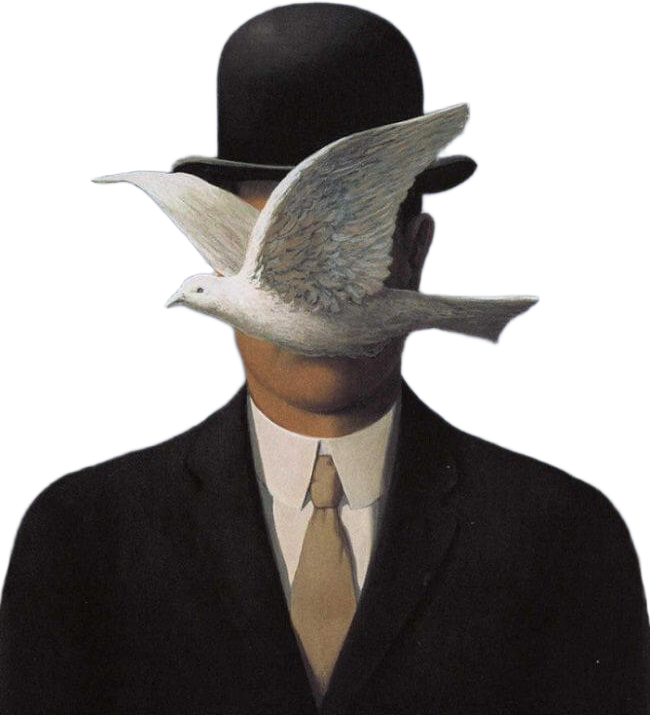
Wrong wrong wrong wrong wrong. Holy holy holy I want to punch that smug face what a condescending ass.
Now for reasons of NUANCE I point out that there’s a motte and bailey here; the macro can be construed descriptively or prescriptively. There’s a world of difference between:

- “satire without clarity of purpose can be mistaken for, and contribute to, that which it intends to criticize” (trivial).
and - “satire must have clarity of purpose, because else yada yada all that crap” (wrong and bad and dumb).
And NUANCE demands of me that I say an author is likely writing satire for a particular purpose, with a “correct” reading in mind, and is naturally interested in effectively communicating that, and might be aghast at their work misread at cross-purposes, and so might genuinely want more clarity, such that this is a good general principle for writing satire, and so on and so forth. But the author is dead, and has been since 1967!
Besides, we care about ART here. Making the audience work a little for their insights is good actually. Chasing clarity of purpose only creates agitprop — or as I like to call it, AGITSLOP. We like our propaganda subtle and subliminal here, thank you very much. Might as well make all comedians explain their jokes!
Not only would the principle (liberally applied) turn deft jobs into hamfists, it smuggles in weird assumptions about art. Does anyone actually believe that the author and work is on the hook for every misreading of their work? Because believe me, people will come away from your work with the strangest ideas. No communication is lossless. Someone will always be there to accuse you of something wild, and upon being informed of their misapprehensions screech “satire requires clarity of purpose et cetera et cetera!”
And what defense is there then? How clear is clear enough? Nothing is universally understood, and so the bar can always be raised to bludgeon any satire that someone dislikes — or didn’t understand. Failures of the audience are not failures of the work.
It is fine to make things that will be misread. Art has no obligation to be maximally accessible. Satire should not be dumbed down to cater to undiscerning audiences. And interpretations diverging from the author’s own purpose for their work can be just as or even more interesting than the intended one — Patrick Bateman fans eat your heart out!
If anyone takes your work uncritically, then you join the most celebrated satires in history in that regard, from A Modest Proposal to The Colbert Report.
But of course, this is not something people actually believe. Rather: it’s a weapon in the discourse trenches. This meme only survives because it is a riposte to an even worse meme — “I was just being ironic ahaha.” Perhaps even a foul and reductive weapon can be wielded to righteous purpose, but I prefer to say: just get better weapons!